Microsoft Licensing, SAM, FinOps and AI Governance: Key Themes from APA Accounting Group
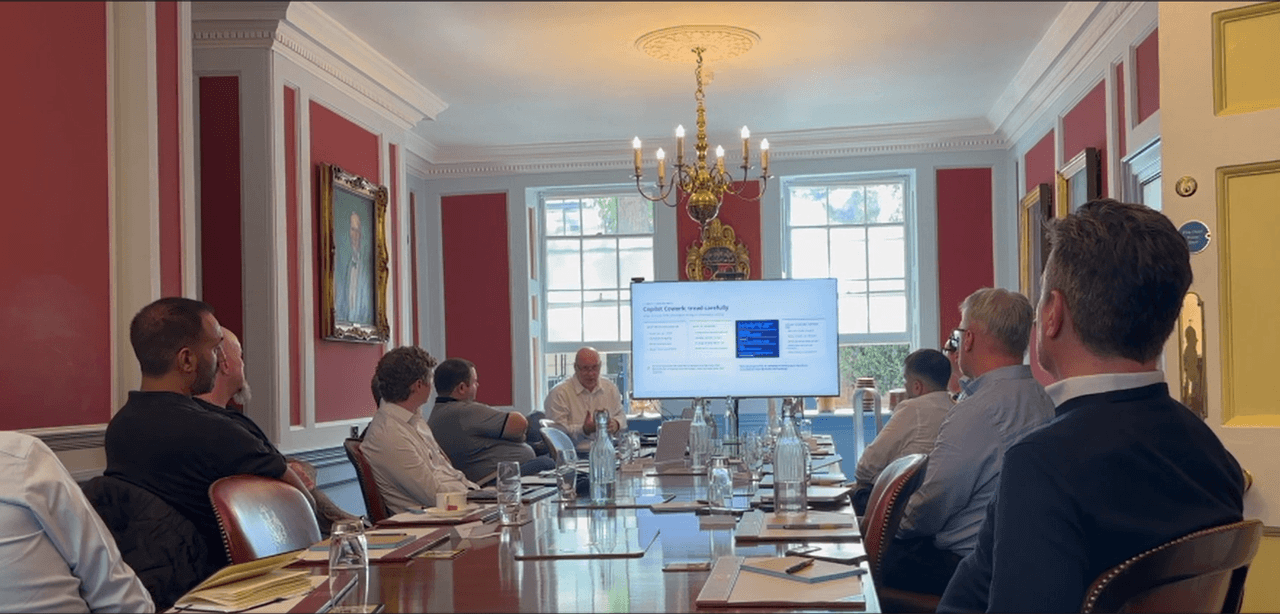
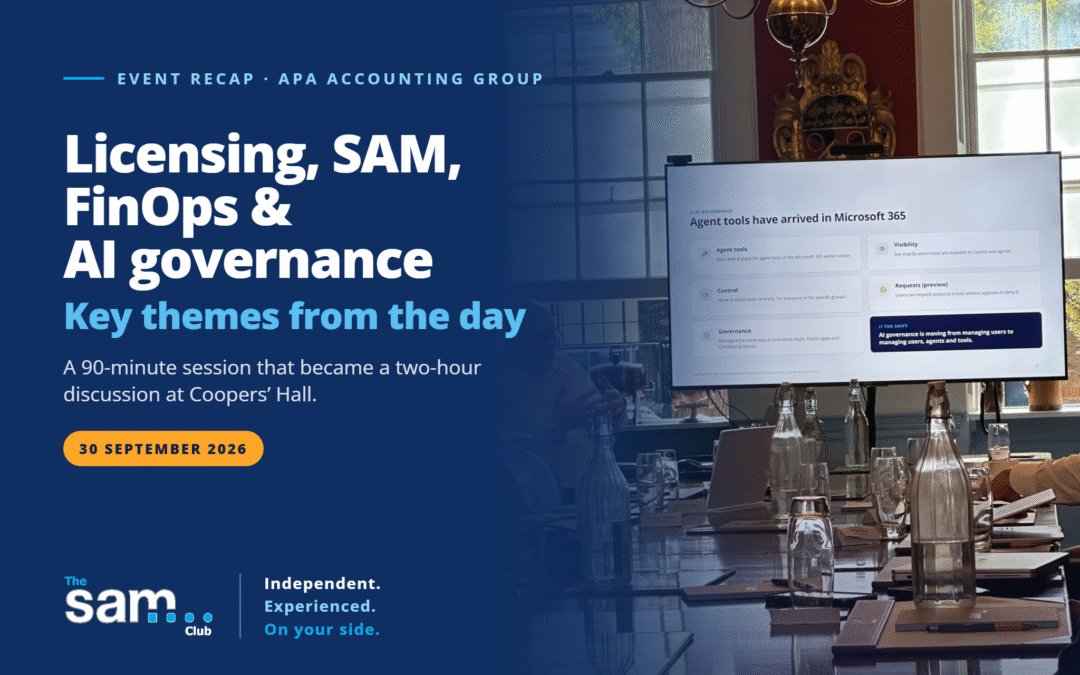
What a fantastic day presenting to the APA Accounting Group on 30 September 2026 on Microsoft Licensing and Software Asset Management.
What was scheduled as a 90-minute session quickly became a two-hour discussion thanks to an engaged audience who contributed valuable insights and questions throughout the event.
The Changing Microsoft Licensing Landscape
One of the key areas we explored was how Microsoft Enterprise Agreements (EAs) and renewal strategies continue to evolve.
We discussed the increasing shift towards consumption-based services and the governance challenges that come with them, particularly around AI technologies such as Microsoft Copilot. Once organisations move beyond simple per-user licensing and into pay-as-you-consume services, AI governance becomes a critical business requirement rather than a future consideration.
Understanding what is being used, who is using it, what it costs, and what controls are in place is rapidly becoming as important as the underlying technology itself.
Azure Cost Management and Hybrid Benefit
We also examined Azure cost management and Microsoft Hybrid Benefit, including the importance of self-governance in maintaining both financial control and licence compliance.
The discussion included upcoming changes surrounding Reserved Instances and why organisations need greater visibility into their cloud estates to avoid unnecessary expenditure and compliance risk.
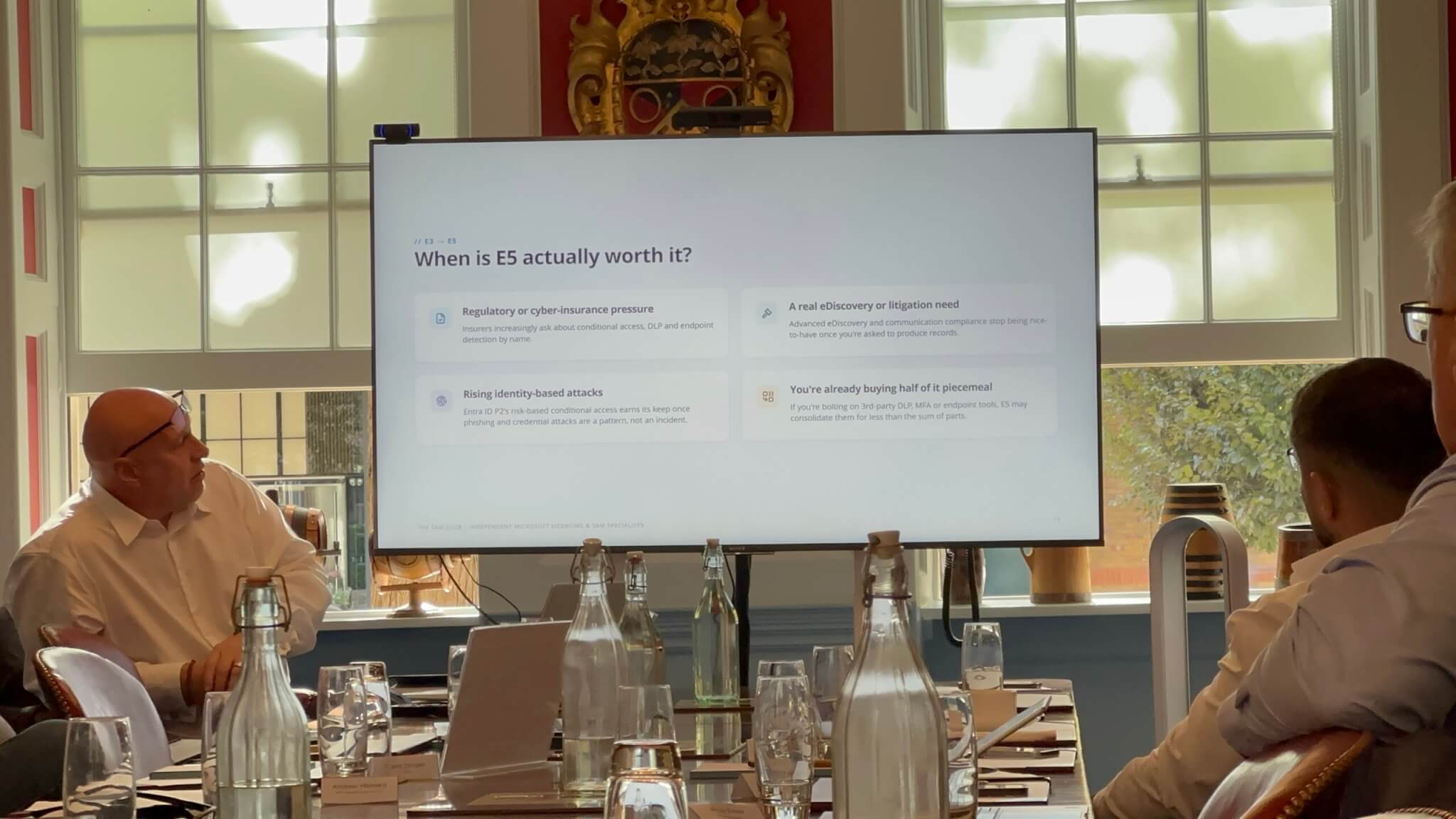
When Does Microsoft 365 E5 or 365 E7 Actually Make Sense?
A particularly lively discussion centred on the progression from Microsoft 365 E3 to E5 to E7.
Rather than focusing purely on product features, we explored the practical question organisations should ask before upgrading: when does the additional investment genuinely deliver value?
Understanding the operational, security, compliance and AI capabilities available at each tier helps organisations make informed decisions based on business need rather than simply adopting the latest bundle available.
The Evolution of Software Asset Management
Another key theme was how Software Asset Management (SAM) has evolved over the last two decades.
SAM originally focused on licence counting and audit defence. It then expanded into cloud governance and optimisation. More recently, FinOps has become a core discipline as organisations seek to control cloud consumption and maximise value.
Today, SAM is increasingly becoming an AI governance function.
Organisations need clear visibility of what technologies are deployed, how they are being consumed, what they cost, and how they align with security, compliance and governance requirements before enabling new services.
Why Visibility Still Matters
We also discussed tooling and reporting approaches.
At The SAM Club, we’ve developed reporting capabilities that sit on top of Microsoft’s administrative data to provide organisations with practical visibility of their licensing and usage position.
The findings can often be surprising.
In one recent review, we identified a user account that had not logged in for more than four years, yet still had both a Microsoft 365 E5 licence and a Microsoft Copilot licence assigned. Examples like this demonstrate how quickly unnecessary costs can accumulate when visibility and governance are lacking.
Cyber Essentials and Software Asset Management
One point that generated significant discussion was the increasingly close relationship between Software Asset Management and Cyber Essentials compliance.
As Cyber Essentials requirements continue to place greater emphasis on supported and properly maintained software, organisations need accurate visibility of their software assets and versions.
This was perfectly illustrated by an attendee who shared an experience from a recent Cyber Essentials assessment where an unsupported version of Zoom was identified during the audit process. It serves as a reminder that software visibility is now as much a security requirement as it is a licensing consideration.
A Historic Venue
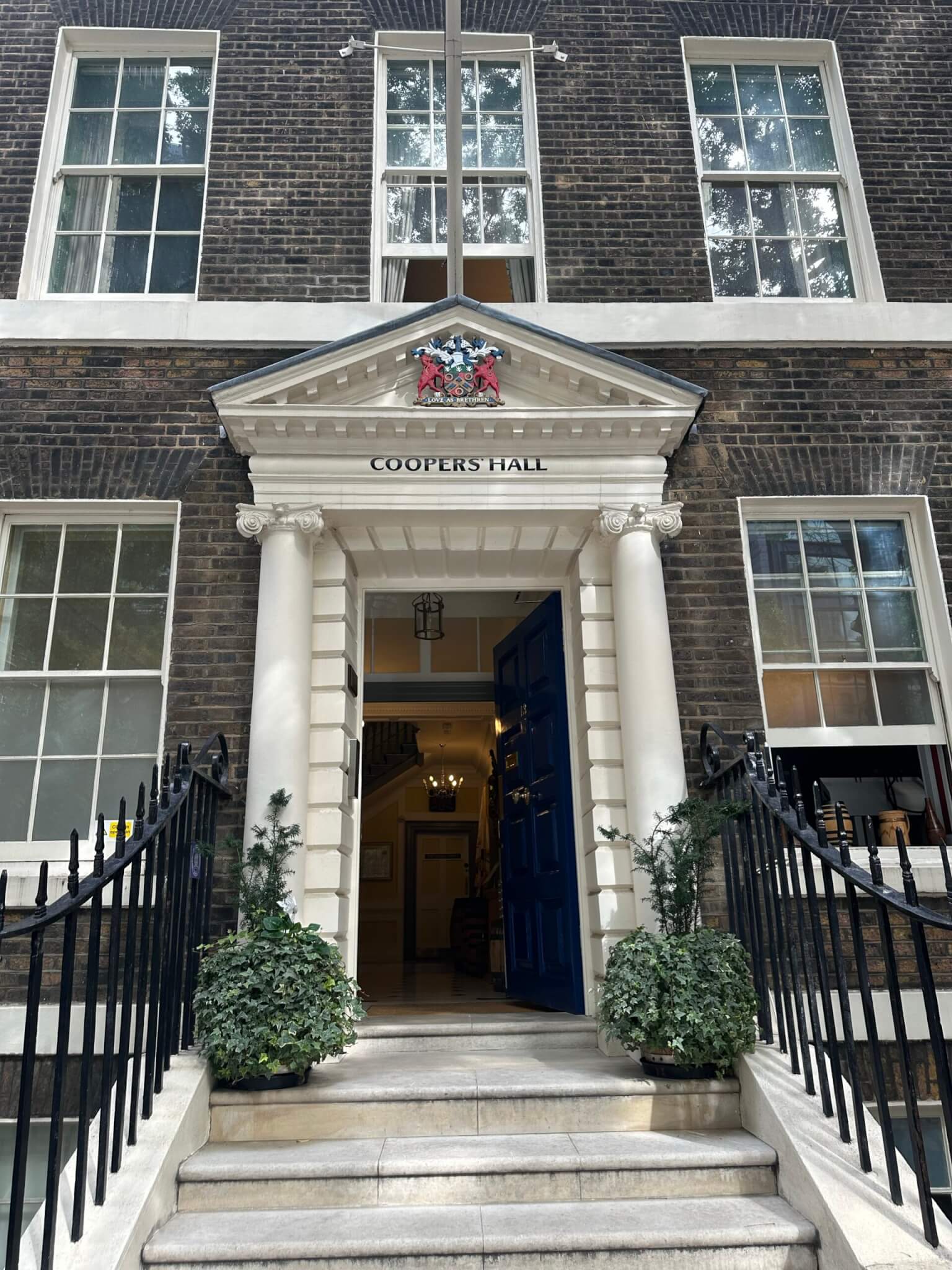
A special mention must go to Coopers’ Hall, the late seventeenth-century home of the Worshipful Company of Coopers, which provided a fantastic setting for the event.
Thanks also to Company of Cooks for their excellent support with the venue and catering. The team looked after everyone brilliantly throughout the day.
Finally, thank you to everyone who attended, contributed to the discussions and shared their experiences. The quality of audience participation made the session particularly enjoyable and demonstrated just how important these topics have become for organisations navigating licensing, cloud governance, FinOps and AI.